
Multiple Parties in Alabama Truck Accidents: Who Can You Sue?
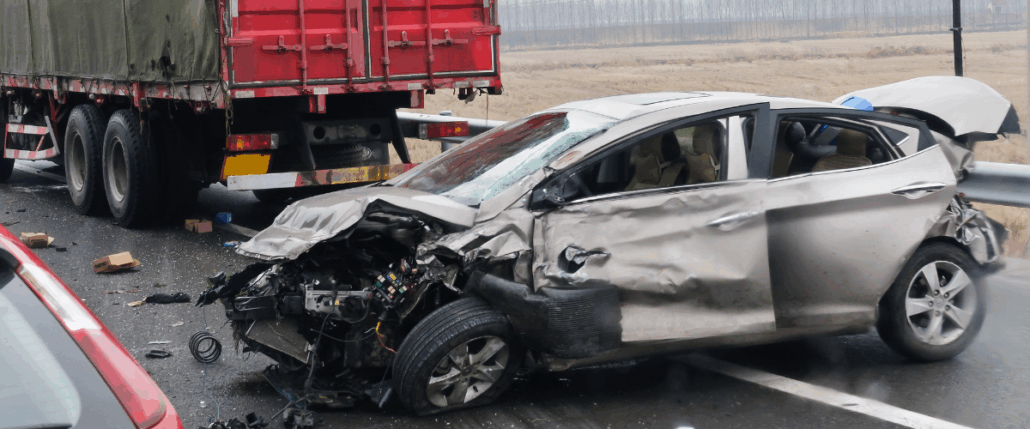
The sight of an 18-wheeler accident on an Alabama highway like I-65, I-10, or the I-20/59 corridor near Birmingham is terrifying. The sheer physics involved—a fully loaded, 80,000-pound vehicle colliding with a 4,000-pound passenger car—often results in catastrophic injuries and devastating losses. In the immediate aftermath, victims are focused on medical care, missing work, and the mounting pile of bills. Soon, however, a vital question arises: Who is responsible for this?
In a standard car accident, the answer is usually straightforward. You file a claim against the at-fault driver’s insurance. But in a commercial trucking case, the answer is almost never that simple.
Why Are Truck Accident Claims So Complicated?
A collision with a semi-truck is not just a “big car accident.” It is a specialized area of personal injury law for several key reasons:
- Multiple Defendants: As this article will detail, there are often four, five, or even more potential defendants. Each one will have its own insurance company and legal team, and their primary strategy is often to point the finger at everyone else, especially you.
- Complex Regulations: The trucking industry is governed by a dense set of federal laws from the Federal Motor Carrier Safety Administration (FMCSA) as well as state regulations. Violations of these rules (covering everything from driver’s hours to vehicle maintenance) are a powerful source of evidence.
- Vast Resources: The defendants are not individuals; they are corporations. Trucking companies, their insurers, and manufacturers have deep pockets and will deploy aggressive legal teams to protect their profits by denying or devaluing your claim.
- Rapid Evidence Destruction: The most important evidence in a truck case—the truck’s “black box” data (Electronic Control Module), the driver’s logs, and the vehicle’s maintenance records—is in the possession of the defendants. This evidence can be legally “lost” or destroyed if steps are not taken to preserve it immediately.
Potential Defendant 1: The Truck Driver
The most obvious at-fault party is the truck driver. Like any motorist, commercial drivers are required to operate their vehicles safely. When they fail, it is often due to common forms of negligence:
- Distracted Driving: Using a phone, GPS, or dispatch radio while moving.
- Fatigued Driving: This is a primary cause of truck wrecks. Drivers are pressured to meet tight deadlines, leading them to violate federal Hours-of-Service (HOS) rules that limit their time on the road.
- Driving Under the Influence (DUI): Operating a commercial vehicle while impaired by alcohol or drugs.
- Speeding: Driving too fast for the truck’s weight or for road and weather conditions.
- Reckless Maneuvers: Making improper lane changes, wide turns, or tailgating.
- Inexperience: A driver who was not properly trained to handle the specific vehicle or cargo.
While the driver is a clear defendant, their personal insurance is almost never enough to cover the immense damages of a truck accident. They are the first link in the chain of liability.
Potential Defendant 2: The Trucking Company (Motor Carrier)
The trucking company, also known as the motor carrier, is the central defendant in most cases. Their liability can be established in two primary ways:
Vicarious Liability (Respondeat Superior)
This is a legal doctrine that holds an employer responsible for the negligent acts of its employee, as long as the employee was acting within the scope of their employment. If the truck driver causes a wreck while on the job, their employer (the motor carrier) is automatically liable for the driver’s negligence.
Direct Negligence
Even more powerful is a claim that the trucking company itself was negligent. This is not about the driver’s mistake in the moment of the crash, but about the company’s own dangerous business practices. Common examples include:
- Negligent Hiring: Hiring a driver with a known history of DUIs, speeding tickets, or previous accidents.
- Negligent Training and Supervision: Failing to properly train a driver on safety procedures, FMCSA regulations, or how to handle the specific truck.
- Negligent Retention: Keeping a dangerous driver on the payroll despite new violations or complaints.
- FMCSA Violations: Pressuring drivers to violate Hours-of-Service rules to meet deadlines, effectively encouraging fatigued driving.
- Poor Maintenance: Failing to properly inspect, maintain, and repair its fleet of trucks, leading to equipment failure.
Potential Defendant 3: The Freight Shipper or Loader
The company that owned the cargo being transported may also be liable. This liability often stems from how the cargo was loaded onto the trailer.
- Improper Loading: If a third-party company loaded the trailer, and the cargo was unbalanced, unsecured, or unevenly distributed, it can dramatically alter the truck’s center of gravity. This can make the truck prone to rolling over in a turn or cause the load to shift and break free.
- Overloading: Every truck has a maximum legal weight limit. A shipper who overloads a trailer puts immense strain on the truck’s brakes, tires, and suspension, which can lead to catastrophic failure on the road.
- Hazardous Materials: If the cargo was hazardous and the shipper failed to properly placard the truck or provide correct documentation, they could be liable for injuries caused by a spill or fire.
Potential Defendant 4: The Freight Broker
In many cases, the trucking company does not have a direct relationship with the shipper. A “freight broker” acts as a matchmaker, connecting shippers who have cargo with motor carriers who can move it.
Brokers have a duty to hire competent and safe motor carriers. Some brokers, however, will knowingly hire a “chameleon carrier”—a company with a horrible safety record that has simply changed its name—just to get the lowest possible price. This is called negligent selection. If the broker knew, or should have known, that the trucking company it hired was unsafe, the broker can be held financially responsible for the resulting accident.
Potential Defendant 5: The Truck or Parts Manufacturer
Sometimes, the accident is not the fault of the driver or the company, but of the machine itself. This is a product liability claim against the manufacturer of the truck or one of its specific components.
- Design Defect: The truck or a part was designed in an inherently unsafe way. For example, a particular model of trailer may be known to be unstable and prone to rollovers, or a fuel tank may be placed in a non-crashworthy location.
- Manufacturing Defect: An error during the assembly process made one specific part fail. This could be a defective set of brakes, a tire that delaminates, or a steering component that snaps.
- Failure to Warn: The manufacturer failed to provide adequate warnings or instructions about a known danger associated with the vehicle.
Potential Defendant 6: Maintenance and Repair Shops
Many trucking companies outsource their vehicle maintenance to third-party repair shops. If a mechanic at one of these shops performs a faulty brake job, incorrectly installs a tire, or fails to fix a known steering problem, that shop can be held liable when their negligent repair work leads directly to a crash.
Potential Defendant 7: Government or Public Entities
In some cases, the condition of the road itself is a primary cause of the accident. Filing a claim against a city, county, or the State of Alabama is exceptionally difficult due to laws like sovereign immunity, but it is possible.
Liability can arise from:
- Unsafe Road Design: A dangerously sharp curve, a poorly designed on-ramp, or a lack of proper signage.
- Failure to Maintain: Not repairing a massive pothole, a collapsed shoulder, or a broken guardrail.
- Construction Zone Negligence: A government contractor that failed to set up a safe, well-marked construction zone.
The Critical Impact of Alabama’s Contributory Negligence Law
This is the most important reason why identifying all potential defendants is a non-negotiable part of any Alabama truck accident case.
Alabama is one of only a few states that still follows the harsh, all-or-nothing rule of pure contributory negligence. This law states that if you, the victim, are found to be even 1% at fault for the accident, you are legally barred from recovering any money. Zero.
The trucking company’s insurance adjuster and lawyers know this rule well. Their entire defense strategy will be to find one small thing they can blame on you. Did you glance at your radio? Were you going one mile over the speed limit? Did you brake “too suddenly”? They will use anything they can to assign that 1% of fault to you and deny your entire claim.
By identifying multiple negligent defendants—the driver, the company, the shipper, the broker—your attorney can build a case that shifts the focus of blame where it belongs. It becomes much harder for a jury to blame you for 1% of the crash when there is overwhelming evidence that the trucking company was 50% at fault, the shipper was 30% at fault, and the driver was 20% at fault.
What Damages Can Be Recovered in a Truck Accident Claim?
The goal of a personal injury claim is to recover financial compensation, known as damages, to make you “whole” again. In a truck accident case, these damages are typically extensive and are broken into several categories.
Economic Damages
These are the direct, calculable financial losses tied to your injuries.
- All past and future medical expenses (ambulance, ER, surgeries, hospital stays, physical therapy, medication)
- Lost wages and income for the time you missed from work
- Loss of future earning capacity if you are permanently disabled
- Vocational rehabilitation costs
- Cost to repair or replace your vehicle and other personal property
Non-Economic Damages
These compensate you for the intangible, human cost of the accident.
- Physical pain and suffering
- Mental anguish and emotional distress
- Permanent scarring and disfigurement
- Loss of enjoyment of life
- Loss of consortium (for the impact on your marriage)
Punitive Damages
In Alabama, punitive damages are sometimes available in cases where the defendant’s conduct was particularly egregious. These are not meant to compensate you, but to punish the defendant and deter similar behavior. This may apply if a trucking company, for example, knowingly hired a driver with multiple DUI convictions to save money.
What Should You Do Immediately After a Truck Accident?
The steps you take in the moments and days after a crash can have a major impact on your health and your legal rights.
- Call 911: Report the accident and request police and medical help. An official police report is a vital piece of evidence.
- Seek Medical Attention: Get evaluated by a medical professional immediately, even if you think you are “fine.” Adrenaline can mask serious injuries like internal bleeding or brain trauma.
- Document the Scene: If you are able, take photos and videos of everything. Get pictures of all vehicles, the truck’s license plate, any DOT numbers or company names on the cab and trailer, the positions of the vehicles, skid marks, and the surrounding area.
- Get Witness Information: Get the names and phone numbers of any other drivers or people who saw what happened.
- Do Not Give a Recorded Statement: The trucking company’s insurance adjuster will call you quickly. Be polite, but do not agree to a recorded statement or sign any documents. Their job is to find a way to blame you 1% and deny your claim.
- Contact an Experienced Truck Accident Attorney: A skilled lawyer will immediately send spoliation letters to all potential defendants, legally demanding that they preserve the truck’s black box data, driver logs, maintenance records, and other evidence before it is destroyed.





Leave a Reply
Want to join the discussion?Feel free to contribute!