
How Poor Lighting Contributes to Pedestrian Accidents in Alabama
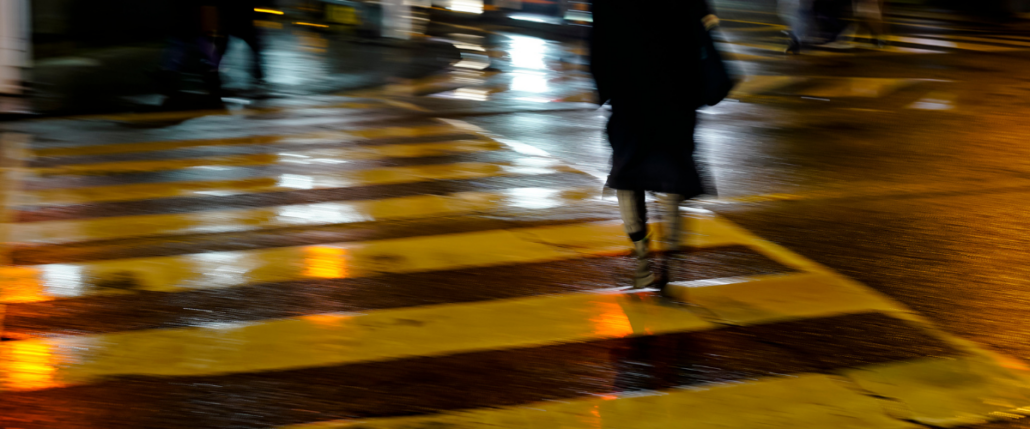
The moments after an accident blur together hospital lights, insurance calls, mounting bills, and the overwhelming shock of a sudden impact in the dark. On Alabama roads, nighttime introduces hazards that completely alter the safety dynamics for people walking near traffic. The lack of ambient light obscures both the pedestrian and the surrounding hazards, leaving individuals vulnerable to devastating collisions.
Why Are Pedestrians More Vulnerable on South Alabama Roads at Night?
Pedestrians are exceptionally vulnerable at night because driver visibility is drastically reduced, making it difficult to gauge distance and speed. Without the structural protection of a vehicle, an impact from a car traveling even at a moderate speed can cause catastrophic or fatal injuries.
Drivers rely almost entirely on visual cues to safely operate their vehicles. During daylight hours, peripheral vision easily picks up movement on sidewalks, road shoulders, and crosswalks. Once the sun goes down, that visual field shrinks to the narrow cone of illumination provided by headlights.
This limitation drastically cuts down the reaction time a driver has to identify a person, recognize the hazard, and apply the brakes. The human eye struggles to accurately judge the speed and distance of objects in low-light conditions, leading drivers to make critical errors in judgment. Key factors that increase vulnerability include:
- Lack of structural protection such as steel frames or airbags.
- Reduced peripheral vision for drivers in low-light conditions.
- Inability of the human eye to accurately judge speed and distance in the dark.
- Increased braking distance required for vehicles traveling at night.
A collision that might cause minor bumper damage to two cars can permanently alter a pedestrian’s life. The physical forces transferred directly to the human body during an impact cause severe trauma. The risk of these collisions multiplies in areas where foot traffic intersects with high-speed vehicle corridors. When a driver is traveling at forty-five miles per hour, they cover over sixty-five feet every single second. By the time their headlights reveal a person crossing the street, the vehicle may have already traveled too far to stop before impact.
How Does Inadequate Street Lighting Cause Pedestrian Collisions?
Inadequate street lighting creates dangerous blind spots and shadows that hide pedestrians crossing intersections or walking along shoulders. When overhead lights fail, drivers often over-rely on low-beam headlights, which do not provide enough reaction time to stop for a person in the roadway.
Proper illumination is a basic safety requirement for modern infrastructure, yet many roadways fail to meet minimum standards. When streetlights are burned out, obscured by overgrown foliage, or spaced too far apart, they create pools of deep shadow between areas of light. These alternating zones of brightness and darkness force the driver’s eyes to constantly adjust, inducing visual fatigue and reducing their ability to spot subtle movements on the edge of the road.
They frequently investigate accident scenes where the design of the crosswalk lighting is fundamentally flawed. Instead of illuminating the pedestrian from the driver’s perspective, poorly placed fixtures sometimes cast the pedestrian in silhouette, rendering them nearly invisible until the last possible moment. Common lighting failures include:
- Burned-out bulbs that create unexpected zones of complete darkness.
- Overgrown landscaping and foliage blocking light fixtures.
- Poorly designed crosswalk illumination that casts pedestrians in silhouette.
- Wide spacing between light poles creating pools of deep shadow.
In rural areas or developing suburbs, street lighting is often completely absent. Drivers are forced to rely solely on their vehicle’s headlights. Research from authoritative agencies, including the CDC’s transportation safety guidelines on pedestrian safety, demonstrates that low-beam headlights only illuminate the road for about one hundred and sixty to two hundred and fifty feet. If a driver is moving at highway speeds, this distance is entirely insufficient to perceive a hazard, react, and bring a heavy machine to a complete stop. These infrastructure failures set the stage for tragic collisions that could easily be prevented with proper maintenance.
Can a Municipality Be Sued for Broken Streetlights in Alabama?
You can potentially sue a municipality for broken streetlights in Alabama if you can prove the city knew or should have known about the dangerous condition and failed to repair it. However, claims against government entities involve strict notice deadlines, typically requiring written notice within six months.
Holding a city or county accountable for failing to maintain safe roadways requires clearing significant legal hurdles. Under Alabama law, municipalities have a duty to keep their public streets in a reasonably safe condition for travel. This includes maintaining traffic signals, road signs, and street lighting.
However, to successfully file a claim against a government entity, you must demonstrate that the city had actual or constructive notice of the hazard. This means our attorneys must gather evidence proving that the city either explicitly knew the streetlight was broken or that the light had been broken for such a long period that the city should have discovered it through routine inspections. Establishing this timeline is a highly technical process involving:
- Filing open records requests for public works complaints.
- Securing maintenance logs from the city department of transportation.
- Gathering witness testimonies regarding how long the light was malfunctioning.
- Filing the formal notice of claim within the strict six-month window.
Additionally, the procedural rules for suing a municipality are aggressively restrictive. Unlike standard personal injury claims, actions against city governments often require you to file a formal notice of claim within an extremely tight window. Missing this deadline automatically invalidates your claim, regardless of how severe your injuries are or how clear the city’s negligence might be.
Can a Business Be Held Liable for Poor Parking Lot Lighting?
Yes, a business can be held liable for poor parking lot lighting under Alabama premises liability law. Property owners have a legal duty to maintain safe premises, which includes providing adequate illumination to prevent pedestrian accidents in areas like shopping centers and commercial parking garages.
The legal framework changes significantly when an accident occurs on private commercial property rather than a public roadway. Alabama premises liability laws require business owners to keep their properties reasonably safe for their invited customers. This duty extends directly to the parking lots, walkways, and entry corridors surrounding the business.
When a customer is struck by a vehicle in a dark, poorly maintained shopping center parking lot, the property owner may share liability with the negligent driver. We look for specific failures, such as broken floodlights, lights set on incorrect timers that fail to activate after dusk, or landscaping that has grown over lighting fixtures.
Commercial property owners often attempt to deflect blame entirely onto the driver who caused the impact. However, if the business owner’s failure to provide adequate visibility created a foreseeable risk of harm, they can be held financially responsible for the resulting injuries.
What Is Alabama’s Contributory Negligence Rule for Pedestrians?
Alabama follows a strict contributory negligence rule, which means if a pedestrian is found even one percent at fault for the accident, they are entirely barred from recovering financial compensation. This makes fighting defense tactics blaming the pedestrian absolutely critical.
The most challenging aspect of handling a pedestrian injury case in this state is navigating the doctrine of contributory negligence. Almost every other state in the country uses some form of comparative fault, where an injured person can still recover damages even if they were partially to blame, with their financial recovery simply reduced by their percentage of fault.
Alabama completely rejects this balanced approach. Under Alabama’s aggressive legal standard, any fault on your part typically results in zero recovery. If a jury determines that the driver who hit you was speeding, texting on their phone, and running a red light making them ninety-nine percent responsible but you stepped off the curb two seconds too early, you may receive nothing. This draconian rule incentivizes insurance companies to fight every single claim vigorously.
Under Alabama Code Section 32-5A-211, pedestrians are required to yield the right-of-way to vehicles when crossing at any point other than within a marked crosswalk or an unmarked crosswalk at an intersection. Defense attorneys use statutes like this to argue that the pedestrian failed to yield, immediately triggering the contributory negligence defense.
How Do Insurance Adjusters Use Visibility to Blame Pedestrians?
Insurance adjusters frequently argue that a pedestrian contributed to the crash by wearing dark clothing, failing to carry a flashlight, or crossing outside a designated, well-lit crosswalk. Their goal is to assign at least one percent of the fault to the pedestrian to completely deny the claim.
Because of the contributory negligence rule, insurance adjusters treat pedestrian accident investigations as aggressive fact-finding missions designed entirely to find victim fault. They will immediately scrutinize what you were wearing at the time of the crash. The dark clothing defense is a favorite tactic. The adjuster will argue that by wearing a navy blue jacket or black jeans at night, you voluntarily made yourself invisible to oncoming traffic, thereby contributing to the accident.
They will also intensely investigate your exact path of travel. Did you cross at the corner, or did you attempt to cross in the middle of the block? Were you walking on the correct side of the road facing traffic where sidewalks were unavailable? Common tactics include:
- Scrutinizing the color and reflectivity of your clothing.
- Questioning your exact path of travel and lane positioning.
- Arguing you failed to maintain a proper lookout for oncoming traffic.
- Hiring reconstructionists to calculate conspicuity and line of sight.
What Types of Damages Can an Injured Pedestrian Recover?
Under Alabama law, an injured pedestrian can recover economic damages for medical bills and lost wages, as well as non-economic damages for physical pain and emotional suffering. In cases of extremely reckless behavior, such as a drunk driver, punitive damages may also be pursued.
The financial devastation following a pedestrian collision often rivals the physical trauma. Because the injuries sustained are usually catastrophic, the compensation required to make a victim whole is substantial. Economic damages form the bedrock of your financial recovery.
These are the measurable, out-of-pocket losses that appear on a spreadsheet. They include the massive bills generated by emergency transport, trauma care at facilities like USA Health University Hospital or Springhill Medical Center, surgical interventions, and long-term physical therapy. Categories of recoverable damages generally include:
- Emergency transportation and acute hospital care bills.
- Rehabilitation, physical therapy, and long-term medical management.
- Lost wages and permanent loss of future earning capacity.
- Physical pain, ongoing discomfort, and emotional suffering.
If your injuries result in permanent impairment, you are entitled to compensation for the permanent loss of your future earning capacity. Non-economic damages compensate you for the profound human costs of the crash. These cover physical pain, ongoing discomfort, emotional distress, and the loss of the ability to enjoy the activities that gave your life meaning before the accident. When a driver’s actions demonstrate a reckless disregard for human life, we will pursue punitive damages to punish the wrongdoer and deter similar conduct in the future.
Where Do Dangerous Nighttime Accidents Happen in Mobile and Baldwin County?
Serious nighttime pedestrian accidents frequently occur along high-traffic commercial corridors in Mobile, such as Airport Boulevard and Government Street, and along unlit, rural two-lane roads in Baldwin County, where visibility is severely limited, and speeds are high.
Understanding the local geography is vital when analyzing pedestrian accidents in our region. In Mobile, we frequently see devastating collisions along major commercial arteries. Airport Boulevard presents a particularly dangerous environment after dark. The combination of heavy consumer traffic, numerous unlit commercial entrances, and pedestrians navigating between shopping centers creates a high-risk zone for foot traffic.
Government Street poses similar threats, especially where historic infrastructure meets modern traffic volumes and complex intersections. The risks escalate near major interchanges, such as where I-65 meets I-10 near downtown Mobile. These areas see massive speed differentials between commercial trucks and passenger vehicles, leaving pedestrians with virtually no margin for error. We frequently monitor claims originating from:
- The I-10 and I-65 interchange near downtown Mobile.
- High-volume intersections along Airport Boulevard and Government Street.
- Corridors along Highway 90 continuing east into Baldwin County.
- Highway 59 in Gulf Shores and Orange Beach during peak tourist seasons.
Across the bay in Baldwin County, the hazards shift but remain deadly. While Highway 90 handles significant volumes of local and commercial traffic, the danger is particularly acute along Highway 59 in Gulf Shores and Orange Beach during peak tourist seasons. Tourists frequently attempt to cross busy, unfamiliar roads at night, often outside of marked crosswalks. Additionally, Baldwin County’s vast network of rural, two-lane roads features long stretches with absolutely no municipal street lighting.
How Long Do You Have to File a Pedestrian Injury Claim in Alabama?
In Alabama, injured pedestrians generally have exactly two years from the date of the crash to file a personal injury lawsuit. Missing this strict statute of limitations deadline will result in a permanent loss of your right to seek any financial compensation.
Time is the single most uncompromising factor in any legal claim. Under Alabama Code Section 6-2-38, the standard statute of limitations for personal injury cases allows you a two-year window to initiate formal legal proceedings. This two-year clock begins ticking on the exact date the accident occurred.
It does not pause while you are waiting for your medical condition to stabilize, nor does it delay while you are actively negotiating with an insurance adjuster. Insurance companies are acutely aware of this timeline. They will often employ delay tactics requesting endless rounds of medical records or offering prolonged, bad-faith negotiations hoping you will let the deadline expire.
If the two-year anniversary passes without a lawsuit being filed in the appropriate venue, such as the Circuit Court of Mobile County or the Circuit Court of Baldwin County, the defense will immediately file a motion to dismiss your case. The judge will grant it, and your case will be over permanently. Establishing your legal strategy long before these deadlines approach is the only way to protect your financial future.




Leave a Reply
Want to join the discussion?Feel free to contribute!