
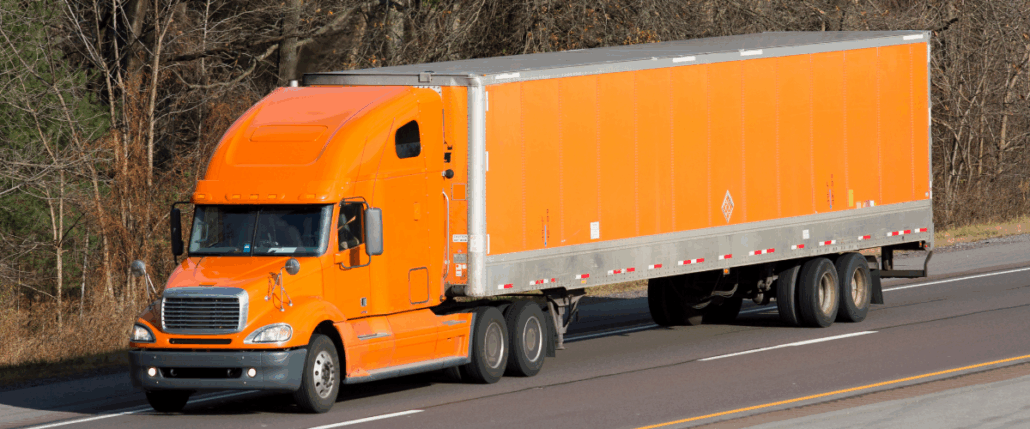
How Truck Size and Weight Contribute to 18-Wheeler Accidents in Alabama
Driving alongside an 80,000-pound tractor-trailer on Interstate 65 can be an unsettling experience. You feel the sheer scale of the machine, the rumble of its engine, and the unsettling push of air as it passes. This feeling is not just intimidation; it is an intuitive understanding of the immense physical forces at play. The very characteristics that make 18-wheelers essential for our economy—their massive size and weight—also make them exceptionally dangerous when things go wrong.
The Unforgiving Laws of Physics: Mass and Momentum
The core of the issue is a simple principle: the heavier an object is and the faster it is moving, the more force it carries. A typical passenger car weighs around 4,000 pounds. A fully loaded commercial truck, by contrast, can legally weigh up to 80,000 pounds—a staggering twenty times more.
When these two vehicles are traveling at the same speed, the truck possesses exponentially more momentum. This means:
- Greater Force of Impact: In a collision, the truck transfers a catastrophic amount of energy to the smaller vehicle. This is why occupants of passenger cars suffer the vast majority of serious injuries and fatalities in truck-car crashes.
- Longer Stopping Distances: The immense momentum makes it impossible for a truck to stop as quickly as a car.
- Reduced Maneuverability: The weight and length of a tractor-trailer severely limit the driver’s ability to swerve or take evasive action to avoid a sudden hazard.
Think of it like trying to stop a charging bull versus trying to stop a running dog. Both are moving, but the bull’s mass makes it an unstoppable force in comparison. That is the reality cars face on the road every day.
Why Can’t a Large Truck Stop on a Dime?
One of the most critical factors in accidents involving large trucks is the discrepancy in braking distance. A passenger car traveling at 65 mph on dry pavement needs about 316 feet—roughly the length of a football field—to come to a complete stop. A fully loaded 18-wheeler, under the same conditions, needs approximately 525 feet. That is almost two football fields.
This 200-foot difference is a massive safety gap. A car driver might see a hazard and stop in time, while a truck driver in the exact same position has no physical way to avoid a collision. Several factors can make this already dangerous situation even worse:
- Road Conditions: Wet or icy roads can double a truck’s stopping distance.
- Brake Condition: Poorly maintained or overheating brakes can lead to “brake fade,” a terrifying situation where the brakes lose their stopping power.
- Driver Reaction Time: The distances above assume an alert driver. A fatigued or distracted truck driver will take even longer to react, adding critical feet to the stopping distance.
When a passenger car cuts in front of a semi-truck or stops suddenly, the truck driver may be physically incapable of preventing a rear-end collision, no matter how quickly they react.
Common Wrecks Tied Directly to Truck Size and Weight
The unique physical properties of tractor-trailers lead to specific types of catastrophic accidents that are rarely seen with smaller vehicles.
- Jackknife Accidents: This occurs when a driver brakes hard, causing the trailer to swing out to the side at a 90-degree angle to the cab, resembling a folding pocketknife. A jackknifing truck can wipe out multiple lanes of traffic in an instant. This is often caused by improper braking, slippery roads, or equipment failure.
- Rollover Accidents: Due to their high center of gravity, large trucks are much more susceptible to rolling over. This can be triggered by taking a turn or an exit ramp too quickly, over-correcting after a steering error, or having a load that shifts unexpectedly. A rollover can crush adjacent vehicles and spill hazardous cargo across the highway.
- Underride and Override Accidents: These are among the most gruesome types of truck accidents. An underride accident happens when a passenger car slides underneath the side or rear of a truck’s trailer. An override is when the truck runs over a smaller vehicle. The height difference between the vehicles is the direct cause of these horrific events.
- “Squeeze Play” or Wide-Turn Collisions: A semi-truck needs a significant amount of space to make a right turn, often having to swing wide to the left first to clear the corner. Passenger car drivers who are unaware of this may try to pass on the right, getting “squeezed” between the turning truck and the curb.
The Critical Role of Cargo: Loading and Weight Limits
A truck’s weight is not just about its total mass; it is also about how that mass is distributed. Federal and Alabama state laws place strict limits on how much weight a truck can carry and how that weight must be balanced over the axles. When these rules are ignored, the risks multiply.
- Overweight Trucks: Exceeding the 80,000-pound limit puts immense strain on a truck’s brakes, tires, and suspension. This can lead to catastrophic equipment failure, such as tire blowouts or complete brake failure on a downhill grade.
- Improperly Secured Cargo: If cargo is not tied down correctly, it can shift during transit. A sudden shift in weight, especially in a turn or during a braking maneuver, can easily cause the driver to lose control, leading to a rollover or jackknife.
- High Center of Gravity: Loads that are top-heavy, like certain types of machinery or logs, raise the truck’s center of gravity even further, making a rollover more likely with even a small steering error.
Who Is Held Responsible for a Weight-Related Truck Accident?
Identifying the at-fault party in a truck accident claim is rarely simple. The negligence often extends far beyond the driver behind the wheel. Multiple parties can share liability for a crash caused by improper weight or loading.
- The Truck Driver: Drivers are responsible for inspecting their load to ensure it is secure and for operating the vehicle safely.
- The Trucking Company (Motor Carrier): The carrier has a duty to properly train its drivers, maintain its fleet of trucks, and ensure its vehicles are not overloaded. They can be held liable for negligent hiring, poor training, or pressuring drivers to violate safety regulations.
- The Cargo Shipper or Loader: The company that loaded the trailer can be held liable if they improperly secured the cargo, exceeded weight limits, or failed to balance the load correctly.
- Maintenance Companies: If a third-party company was responsible for brake and tire maintenance and their poor work led to equipment failure, they could be a party to the claim.
How Alabama’s Harsh Negligence Law Affects Your Claim
Proving the cause of a truck accident is especially important in Alabama because of our state’s adherence to a pure contributory negligence rule. This law is unforgiving. It states that if you are found to be even 1% at fault for the accident that caused your injuries, you are barred from recovering any compensation from the other party.
Even if a truck driver was speeding and driving on bald tires, if their insurance company can convince a jury that you were 1% to blame—perhaps for changing lanes without signaling far enough in advance—your claim could be denied entirely. This is why trucking companies and their insurers aggressively search for any reason to shift a small fraction of the blame onto the victim. Building a case that meticulously details how the truck’s excessive weight or unstable load was the sole cause of the crash is essential to overcoming this defense.
What Compensation Can Be Recovered After a Truck Wreck?
The consequences of a collision with an 18-wheeler are often life-altering. A claim for damages seeks to provide financial stability for victims and their families to account for the immense harm they have suffered. Compensation can be sought for both tangible and intangible losses.
- Economic Damages: These are the verifiable financial costs associated with the accident, including current and future medical bills, lost wages, diminished earning capacity for the future, and rehabilitation costs.
- Non-Economic Damages: These are intangible but very real losses, such as physical pain and suffering, emotional distress, mental anguish, scarring and disfigurement, and loss of enjoyment of life.
What Should You Do After a Collision with a Commercial Truck?
The moments after a truck accident are chaotic, but the steps you take can protect your health and your legal rights.
- Call 911 Immediately: Report the accident and request medical assistance for anyone who is injured.
- Seek Medical Attention: Get a thorough medical evaluation, even if you feel fine. Some serious injuries, like internal bleeding or brain trauma, may not have immediate symptoms.
- Document the Scene: If you are able, take pictures and videos of the vehicles, the positions of the trucks, skid marks, road debris, and any visible injuries.
- Gather Information: Get the truck driver’s name, license number, insurance information, and the name of the trucking company. Also, collect contact information from any witnesses.
- Do Not Give a Recorded Statement: The trucking company’s insurance adjuster may call you quickly. Do not provide a recorded statement or sign any documents without first speaking to an attorney. Their goal is to minimize their company’s liability.
- Contact an Experienced Truck Accident Attorney: These cases are complex legal matters. An attorney can immediately begin an investigation, preserve critical evidence like the driver’s logbooks and the truck’s “black box” data, and handle all communications with the insurance companies on your behalf.
The sheer size and weight of commercial trucks give them the potential to cause unimaginable destruction. When that potential becomes a reality, victims deserve a legal advocate who understands the unique challenges of these cases.











Leave a Reply
Want to join the discussion?Feel free to contribute!