

How Are Truck Accidents Different From Car Accidents in Alabama?
The moments immediately following a highway collision are universally terrifying, but when the crash involves a massive commercial vehicle, the scale of destruction changes entirely. A routine commute along Interstate 65 or Interstate 10 in Mobile County can turn into a life-altering disaster in a matter of seconds. As you sit on the shoulder of a busy Alabama highway, the confusion multiplies rapidly. You are suddenly forced to deal with a catastrophic scene, out-of-state corporate logos, aggressive motor carrier insurance adjusters calling your phone, and a mounting pile of medical bills from local trauma centers like USA Health University Hospital.
The physical pain from severe injuries can be completely overwhelming, but the most pressing legal and financial thought is usually about accountability and untangling a dense web of corporate liability.
Why Do Commercial Truck Wrecks Cause More Severe Injuries Than Car Accidents?
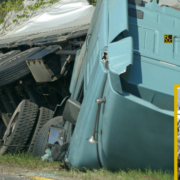
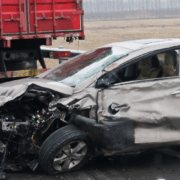
Commercial truck wrecks result in catastrophic injuries due to the immense physical forces involved. A fully loaded semi-truck can weigh up to 80,000 pounds, whereas a standard passenger vehicle weighs roughly 4,000 pounds. This extreme mass disparity generates devastating kinetic energy during a highway collision.
The physics of an 18-wheeler wreck dictates that the smaller passenger vehicle absorbs the vast majority of the impact force. When a vehicle weighing forty tons collides with a standard sedan, the structural integrity of the smaller car is completely compromised. This massive disparity in size and weight explains why commercial vehicle collisions rarely result in minor property damage or simple bumps and bruises. Instead, these violent impacts routinely leave victims with life-altering physical trauma that requires immediate emergency surgery, intensive diagnostics, and months of specialized rehabilitation. Common catastrophic outcomes observed after highway truck collisions in Mobile include:
- Traumatic brain injuries (TBIs) and severe concussions from violent skull impacts.
- Spinal cord damage resulting in temporary or permanent paralysis, paraplegia, or quadriplegia.
- Complex bone fractures, crushed joints, and limb amputations requiring extensive orthopedic surgeries.
- Severe internal organ damage and internal bleeding from blunt-force abdominal trauma.
- Deep lacerations, severe friction burns, and permanent physical scarring from deploying airbags or crushed metal panels.
Beyond the immediate physical trauma, the long-term medical care required for truck accident survivors is astronomically expensive. A short stay at an emergency department for stabilizing treatments can exhaust baseline insurance policies within hours of arrival. Because commercial trucks require significantly longer stopping distances than passenger cars, many of these high-speed collisions along corridors like Interstate 65 happen with virtually no braking beforehand, leaving the occupants of the passenger car completely unprotected from the full, unmitigated force of the impact.
How Do Federal Regulations Affect Alabama Truck Accident Claims?
Unlike passenger car accidents governed purely by state traffic laws, commercial truck wrecks involve strict federal oversight. The Federal Motor Carrier Safety Administration enforces rigid rules regarding driver screening, vehicle maintenance schedules, and mandatory rest periods that fundamentally alter how liability is evaluated.
The commercial trucking industry is bound by a massive framework of federal laws designed to protect the public from the inherent dangers of operating heavy machinery on public roadways. These regulations, established and enforced by the Federal Motor Carrier Safety Administration, cover almost every aspect of a transportation company’s daily operations. When an 18-wheeler accident occurs in Alabama, an experienced injury lawyer must immediately investigate whether the driver or the motor carrier violated any of these strict federal safety mandates. These complex regulations govern key areas of operation, including:
- Hours of Service (HOS) rules that strictly limit the number of hours a commercial driver can remain behind the wheel without taking mandatory rest breaks.
- Mandatory pre-employment background screening, drug testing, and ongoing alcohol monitoring for all commercial driver’s license (CDL) holders.
- Rigid inspection, repair, and maintenance schedules that require detailed daily logs for every commercial vehicle in an active fleet.
- Strict commercial weight limits and specialized cargo-securing requirements to prevent dangerous trailer shifts or rollover accidents.
- Compulsory post-accident drug and alcohol testing for commercial drivers involved in wrecks resulting in a human fatality or severe bodily injury.
If a motor carrier or its driver fails to adhere to these federal rules, that violation serves as powerful evidence of corporate negligence in an Alabama civil claim. For instance, if electronic logs reveal that a tired driver exceeded their legally permitted driving hours to meet an aggressive corporate delivery deadline, the trucking company can be held legally accountable for operating a fatigued vehicle. Uncovering these violations requires a deep familiarity with federal transportation regulations and the technical ability to parse through hundreds of pages of corporate documentation.
Who Can Be Held Liable For A Tractor-Trailer Crash In Mobile County?
Car accidents usually involve a single negligent driver, but truck accidents feature multiple corporate targets. Liability can extend past the truck driver to include the motor carrier, cargo loading companies, maintenance contractors, and third-party vehicle parts manufacturers.
When two standard passenger cars collide on a street in Mobile, determining fault is usually a straightforward process centered on which driver made a careless mistake. In sharp contrast, a commercial truck accident requires peeling back multiple dense layers of corporate and contractual relationships to identify every single at-fault party. Under Alabama civil law, multiple distinct entities can share financial liability for a single tractor-trailer collision, depending on the specific root causes of the wreck. Potential liable parties in a commercial vehicle claim often include:
- The commercial truck driver whose immediate negligence, such as speeding, distracted driving, or driving while fatigued, directly triggered the collision.
- The trucking company or motor carrier under the legal doctrine of respondeat superior, which holds employers responsible for the negligent acts of their employees.
- Third-party cargo loading companies if improperly balanced freight or unsecured cargo caused a sudden jackknife or rollover on the highway.
- Independent maintenance facilities and mechanics if they failed to perform necessary safety inspections or ignored badly worn brake components.
- Automotive parts manufacturers if a defective tire blowout, steering failure, or manufacturing flaw directly caused the mechanical breakdown.
Because there are often multiple corporate entities involved, these defendants will immediately point fingers at one another in an attempt to shift the heavy financial burden away from their own respective policies. A motor carrier might claim the driver was an independent contractor, while the maintenance facility might argue the defect was an unpreventable manufacturing flaw. Disentangling this defensive web requires an aggressive legal strategy that forces all corporate parties to produce their internal contracts, hiring records, and communication logs during the discovery phase of a lawsuit.
What Lethal Evidence Sits Inside A Commercial Truck’s Black Box?
Commercial trucks carry electronic logging devices and event data recorders that capture critical data before an impact. This technology tracks sudden braking, speed changes, steering angles, and exact hours of service, providing objective proof of negligence.
In a standard automobile collision, personal injury lawyers must frequently rely on conflicting eyewitness testimonies, basic police reports, and post-accident vehicle placement to reconstruct how the incident occurred. Commercial truck accidents provide a much richer, highly technical source of objective evidence through onboard computers. Modern semi-trucks are equipped with advanced Event Data Recorders (EDRs), commonly referred to as ‘black boxes,’ as well as Electronic Logging Devices (ELDs). This advanced technology continuously records real-time mechanical data that can completely expose a driver’s or company’s negligence. This digital evidence routinely captures vital metrics, such as:
- The exact speed of the commercial vehicle in the critical seconds leading up to the physical impact.
- Whether or not the commercial driver applied the brakes, and precisely how many seconds before the crash braking occurred.
- Sudden steering adjustments, throttle positions, and the exact system parameters at the time of the collision.
- The precise hours of service recorded digitally, showing exactly how long the driver had been operating the vehicle without sleep.
- Engine diagnostic codes that reveal whether the truck was actively operating with known mechanical or braking system failures.
However, this invaluable digital evidence is in immediate jeopardy after a crash occurs. Trucking companies and their corporate insurance defense teams move exceptionally fast. They frequently repair the damaged fleet vehicle or clear the black box data within weeks under the guise of routine maintenance. To prevent this destruction of vital proof, our knowledgeable legal team must immediately draft and issue a formal legal document known as a spoliation letter. This letter legally compels the motor carrier to preserve all digital data, physical truck components, and maintenance records exactly as they are, ensuring that critical evidence is fully protected for structural engineering analysis.
How Does The Trucking Company’s Insurance Policy Differ From A Standard Auto Policy?
Commercial motor carriers operate under massive corporate insurance policies with limits frequently reaching millions of dollars. Because the financial stakes are exceptionally high, these insurance companies deploy aggressive corporate adjusters to the accident scene immediately to minimize payouts.
The financial framework surrounding a commercial vehicle accident is entirely different from an everyday passenger car insurance claim. While Alabama law requires ordinary motorists to carry a baseline minimum of $25,000 in bodily injury liability coverage, federal regulations mandate that commercial motor carriers maintain substantially higher insurance limits. Depending on the type of cargo being transported, a commercial truck must carry anywhere from $750,000 to over $5 million in liability coverage. Because these corporate policies involve such immense sums of money, the insurance providers defend them with extreme aggression.
Within hours of a severe crash on Interstate 10 or Interstate 65, the trucking company’s insurance provider will deploy a specialized rapid-response team directly to the physical scene. These corporate investigators, adjusters, and defense lawyers are tasked with a single objective: minimize the insurance company’s financial exposure. They will take photos, interview shaken witnesses, and attempt to contact the injured victims while they are still recovering in trauma centers like USA Health University Hospital. They routinely offer quick, lowball settlements to unrepresented victims before the full extent of their medical injuries is even diagnosed. Managing these hostile adjusters requires a highly coordinated and aggressive legal strategy to protect your financial survival and ensure your rights are completely defended.
What Is The Statute Of Limitations For Filing A Truck Accident Suit In Alabama?
Under Alabama law, injury victims have exactly two years from the date of the commercial truck accident to file a formal civil lawsuit. Missing this rigid deadline permanently eliminates your legal right to seek financial recovery in court.
Time is an unyielding enemy following a major highway collision. The Alabama legal system imposes incredibly strict deadlines on an individual’s ability to hold negligent corporate parties financially accountable for bodily injuries and property damage. Under Alabama Code Section 6-2-38, a personal injury complaint must be officially filed in a civil court within a rigid two-year window starting from the exact calendar date the accident occurred. While two years might initially sound like an abundance of time to resolve a claim, waiting to secure skilled legal representation can prove fatal to your case.
The investigative process required to build a successful commercial truck lawsuit is extensive and time-consuming. Physical evidence at the crash scene literally washes away with the next heavy Gulf Coast rainstorm. Independent witnesses change their contact information, move out of state, or simply forget vital details about the collision over time. More importantly, corporate fleet owners move at an exceptional pace to protect their financial interests. If a legal team cannot secure a formal spoliation order quickly, the vehicle may be sold at public auction or completely scrapped, destroying the ability to perform a detailed forensic mechanical analysis. Engaging legal counsel immediately ensures that these strict filing deadlines are heavily protected and that critical evidence is legally preserved before it is permanently lost.
What Compensation Can You Recover After An 18-Wheeler Collision In Alabama?
Victims of commercial truck accidents can pursue comprehensive economic and non-economic damages. These cover immediate medical bills at regional trauma centers, long-term rehabilitation costs, lost revenue, diminished future earning capacity, physical pain, and profound mental anguish.
The physical, emotional, and financial toll of a commercial vehicle wreck can completely shatter a family’s stability. Under Alabama civil law, victims who have suffered harm due to a motor carrier’s negligence possess an absolute legal right to demand comprehensive financial compensation designed to make them whole again. These recoverable losses are categorized into specific types of damages that our civil litigators aggressively pursue on behalf of our clients. A successful truck accident claim typically addresses two major categories of losses:
- Economic damages that cover your exact, calculable monetary losses, such as emergency room bills, future surgical procedures, and physical therapy sessions.
- Lost wages and compensation for a permanently diminished future earning capacity if your physical injuries prevent you from returning to your career.
- Property damage recovery to cover the total replacement value of your destroyed passenger vehicle and any personal items lost in the crash.
- Non-economic damages that address profound, intangible human suffering, including extreme physical pain and ongoing mental anguish.
- Compensation for a permanent physical impairment, severe physical scarring, loss of enjoyment of life, and post-traumatic stress disorder.
In rare and specific situations where the at-fault truck driver or the motor carrier acted with intentional malice or extreme, conscious recklessness, Alabama courts may also award punitive damages. Examples include a carrier intentionally forcing a driver to violate federal hours-of-service safety mandates, or a driver operating a heavy commercial rig while highly intoxicated by drugs or alcohol. Punitive damages are explicitly designed to punish the negligent corporate wrongdoer financially and send a fierce warning to the general public that dangerous misconduct on Alabama roadways will face severe consequences.
Our Commitment to Your Financial Recovery
Navigating the aftermath of a commercial truck collision requires a legal team that understands how to stand up to massive international transportation corporations and their aggressive insurance carriers. At Burns, Cunningham & Mackey, P.C., our highly regarded personal injury attorneys have spent decades representing injured individuals and local families in Mobile County and across Alabama. We provide a highly coordinated, aggressive legal strategy designed to uncover federal safety violations, secure critical black box evidence, and hold every single at-fault corporate entity accountable for the devastation they have caused.
If you or a loved one has been injured by an 18-wheeler, contact our Mobile office today to speak with an experienced advocate who will fight dedicatedly for the justice and full compensation your family deserves.
Frequently Asked Questions
Can I still recover compensation if the trucking company is based out of state?
Yes. Out-of-state trucking corporations operating on major Alabama interstates like Interstate 10 or Interstate 65 are fully bound by both federal transportation safety regulations and Alabama tort laws. Your legal claim will be filed and handled locally within the Alabama civil court system, regardless of where the motor carrier’s corporate headquarters or primary dispatch facilities are physically located.
What should I do immediately at the scene of a commercial truck wreck?
Your immediate priority must always be your physical safety and securing emergency medical evaluation at a local trauma center like USA Health University Hospital. If you are physically capable, contact the Alabama Law Enforcement Agency to ensure responding state troopers generate an official accident report. Photograph the final resting positions of all vehicles, skid marks, and corporate logos, gather witness contact details, and do not make any statements to corporate insurance adjusters.
Why do trucking companies try to repair their vehicles immediately after an accident?
Fleet management companies move exceptionally fast to repair or scrap their commercial vehicles to get these valuable assets back into service and limit the opportunity for independent forensic inspections. To prevent this destruction of critical proof, your legal counsel must immediately issue a formal spoliation letter to legally freeze the truck’s condition and preserve all black box data for structural analysis.
Will my private health insurance cover my medical bills after a semi-truck accident?
Your private health insurance provider may cover your initial emergency trauma care and diagnostic imaging, but they maintain a strict right of subrogation under their contract policies. This means that your health insurance company will legally demand full reimbursement for all medical bills they paid out from your final civil settlement or jury award received from the at-fault commercial insurance policy.
How long does it take to resolve a commercial truck accident lawsuit in Alabama?
Because commercial truck accidents involve complex layers of corporate liability, federal safety violations, and severe physical injuries, they routinely take significantly longer to resolve than a standard passenger car accident claim. A comprehensive investigation, expert witness review, and corporate negotiation process can take anywhere from several months to multiple years to achieve a full and fair resolution.






Leave a Reply
Want to join the discussion?Feel free to contribute!